


Orthodontic Benefits
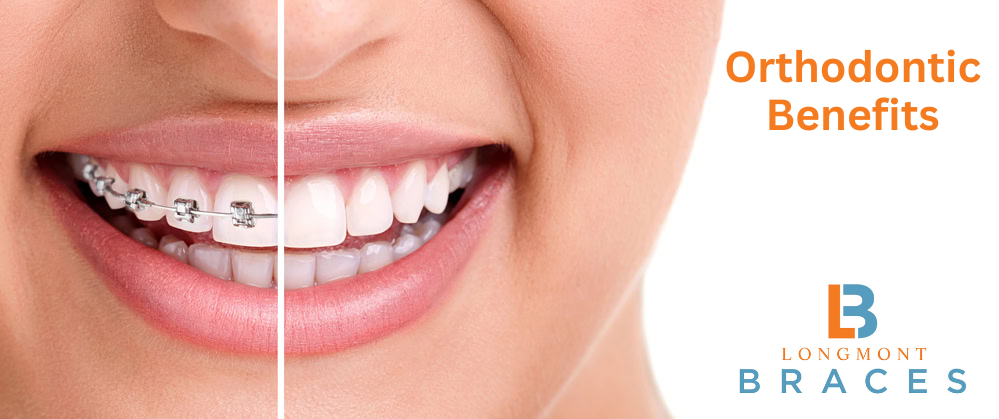
Orthodontic treatment does more than straighten teeth — and understanding what it actually does for long-term oral health, function, and overall wellbeing gives parents and teens a clearer basis for evaluating whether treatment is worth the time and cost, and a more compelling reason to commit to it fully.
Orthodontics for teens delivers benefits that extend well beyond appearance — and many of the most significant ones are the ones least likely to be visible in a before-and-after photo.
Oral Health Benefits & Why Alignment Matters for Dental Health
Easier Cleaning and Reduced Cavity Risk
Crowded, overlapping, and rotated teeth create areas that are genuinely difficult to clean — not because patients aren’t trying, but because a toothbrush and floss physically cannot reach between teeth that are pressed together or stacked. Plaque accumulates in these areas regardless of brushing frequency, and persistent plaque is the direct cause of both cavities and gum disease.
When teeth are properly aligned, the surfaces are accessible. Cleaning becomes more effective, plaque accumulation decreases, and the long-term cavity and gum disease risk drops meaningfully. This is not an incidental benefit — it is one of the primary health reasons orthodontic treatment is recommended.
Gum Disease and Bone Loss Prevention
Chronic plaque in hard-to-reach areas does not just cause cavities — it causes periodontal disease, the progressive infection of the gum tissue and the bone supporting the teeth. Untreated periodontal disease leads to bone loss that is irreversible. Alignment that makes cleaning effective is a direct form of bone loss prevention over a lifetime of dental health.
Bite Correction Benefits — Function and Longevity
Tooth Wear from an Uncorrected Bite
A bite that does not meet correctly does not distribute chewing forces evenly. Teeth that absorb disproportionate force — particularly in a deep bite, open bite, or crossbite — wear down faster than they should. Enamel that is worn away does not regenerate. An uncorrected bite problem that causes uneven wear in the teens and twenties becomes a restorative dentistry problem in the forties and fifties.
Correcting the bite distributes chewing forces appropriately and preserves enamel over the long term.
Chewing Efficiency
A properly aligned bite allows both sides of the mouth to function together. Patients with significant bite discrepancies — open bites, underbites, or severe crowding — often compensate by chewing on one side or avoiding certain foods. After bite correction, chewing is more efficient and comfortable, and the compensatory habits resolve.
Jaw Joint Health
Bite problems that cause uneven force distribution or jaw shifting can contribute to temporomandibular joint (TMJ) symptoms — jaw pain, clicking, and headaches. Correcting the bite does not resolve all TMJ problems, but addressing the underlying bite discrepancy removes a contributing factor that, left untreated, can worsen over time.
Functional Benefits Beyond Chewing
Speech Clarity
Certain bite problems directly affect speech. An open bite — where the upper and lower teeth do not meet — makes it difficult to produce sounds that require the tongue to contact the back of the front teeth. A significant overjet creates similar challenges. Correcting these bite relationships improves the physical mechanics of speech production.
Reduced Injury Risk
Protruding upper front teeth — significant overjet — are substantially more vulnerable to trauma than teeth in normal position. Studies consistently show that children and teens with large overjet are more likely to chip or fracture their front teeth in a fall or collision. Bringing the upper teeth back into a protected position reduces that risk directly.
Psychological Benefits for Teens
The confidence benefit of a corrected smile is real and documented — and for teens specifically, the timing matters. The years when orthodontic treatment typically occurs are the same years when self-image is forming and social dynamics are most sensitive. Teens who are self-conscious about their teeth often restrict their smiling, avoid social situations, or experience reduced confidence in academic and social settings.
The psychological benefit of treatment during the teen years is not superficial — it affects how a young person presents themselves during a formative period.
The Cost of Not Treating
What Untreated Problems Become
Many orthodontic problems worsen over time rather than resolving. A crossbite that causes jaw shifting in a teenager becomes a structural asymmetry in an adult. Crowding that prevents effective cleaning becomes a pattern of recurring cavities and periodontal treatment. An untreated bite problem that causes gradual tooth wear eventually requires crowns, veneers, or other restorative work that costs significantly more than the orthodontic treatment that could have prevented it.
The long-term financial case for orthodontic treatment is straightforward: prevention is less expensive than correction. Treating a problem during the optimal window — when the jaw is still growing and the teeth are accessible — avoids the more complex and costly interventions that become necessary when the same problem is addressed later.